Non-Cooperation Movement
Mass civil disobedience across the nation led by Mahatma Gandhi.
📜About This Movement
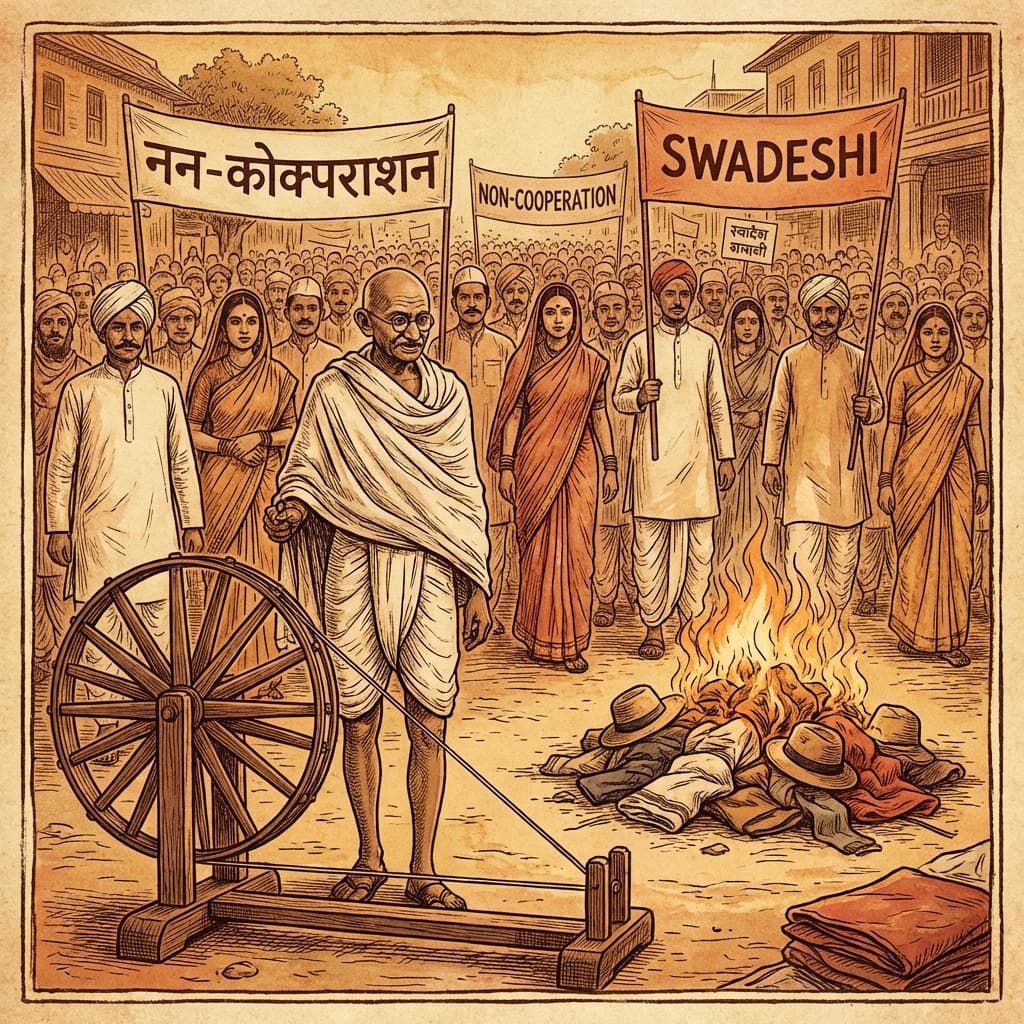
The Non-Cooperation Movement was a significant phase of the Indian independence movement, launched on September 4, 1920, by Mahatma Gandhi. It marked a major turning point in the freedom struggle, introducing the concept of mass non-violent resistance against British rule.
The movement was born out of two major events - the Jallianwala Bagh massacre of 1919 and the Khilafat issue. Gandhi called upon Indians to withdraw from British institutions, return government titles and honours, boycott British goods, and refuse to participate in government services.
Millions of Indians responded to Gandhi's call. Students left government schools and colleges, lawyers boycotted British courts, and villagers refused to pay taxes. The movement saw unprecedented Hindu-Muslim unity as both communities came together against colonial rule.
👥Key Leaders
📅Key Events
Launch of the movement (September 4, 1920)
Boycott of British goods and institutions
Return of titles and honours by Indians
Chauri Chaura incident (February 4, 1922)
Suspension of the movement (February 1922)
⭐Historical Significance
First mass movement that involved all sections of society and introduced non-violent resistance as a political tool.
"Freedom is not given, it is taken."
— Netaji Subhas Chandra Bose
🇮🇳 Jai Hind 🇮🇳